My aim was to spin a gradient scarf and weave it up in a diamond twill pattern with the pattern showing on the cream section in the middle
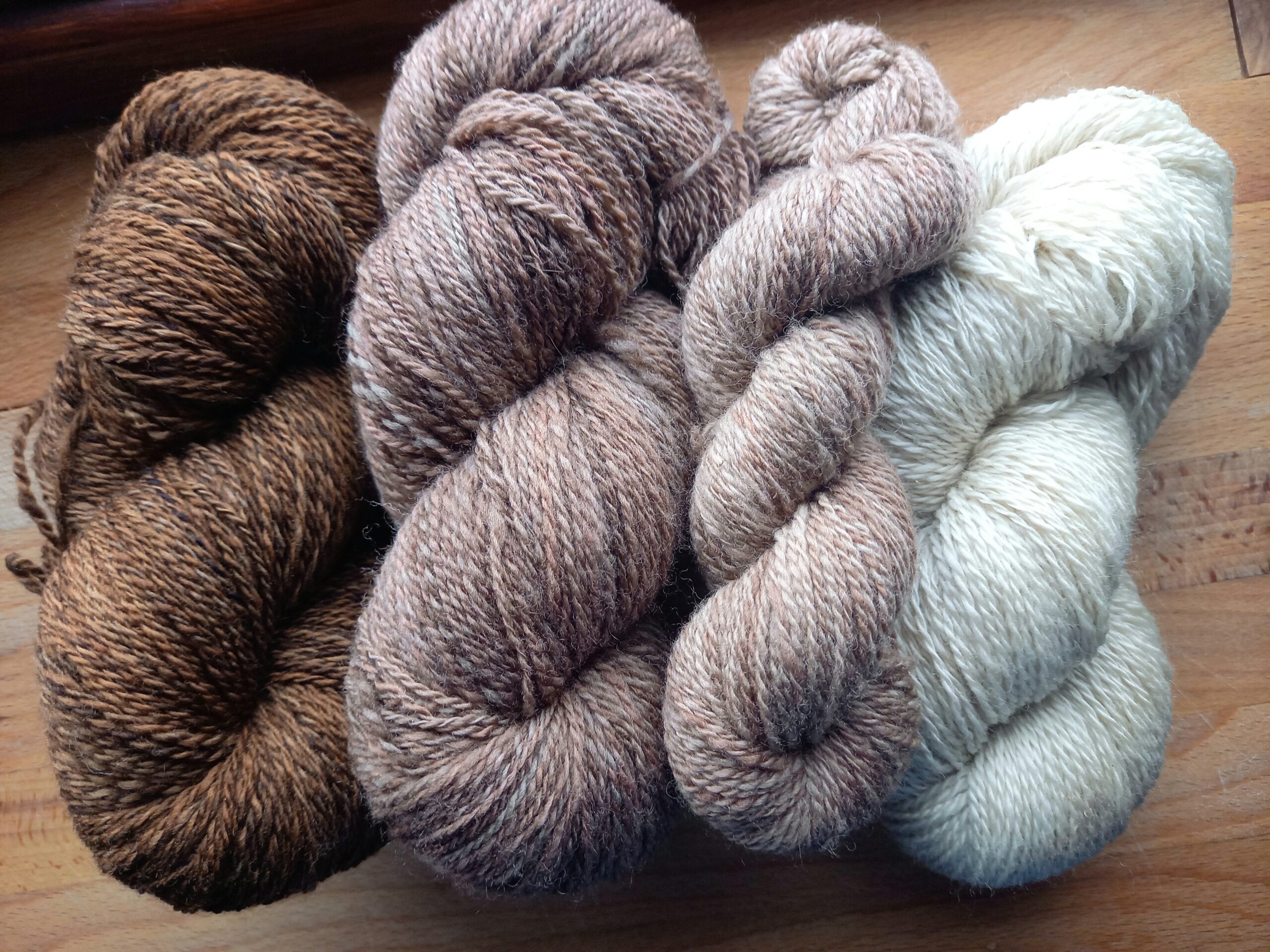
As mentioned in the previous post, the fibre is Cormo ( an Australian breed of sheep - Merino and Corriedale cross) and so had the softness I wanted to wear around my neck with a micron count of 23*. My Cormo came from World of Wool, you can buy it here
*a micron is a measurement of a millionth of a metre
I spun a short forward draw on my Kromski Fantasia and my plied yarn came out at 19wpi which is my usual default spin and to be honest, I worked around that because I wanted to chat and watch tv while I spun.
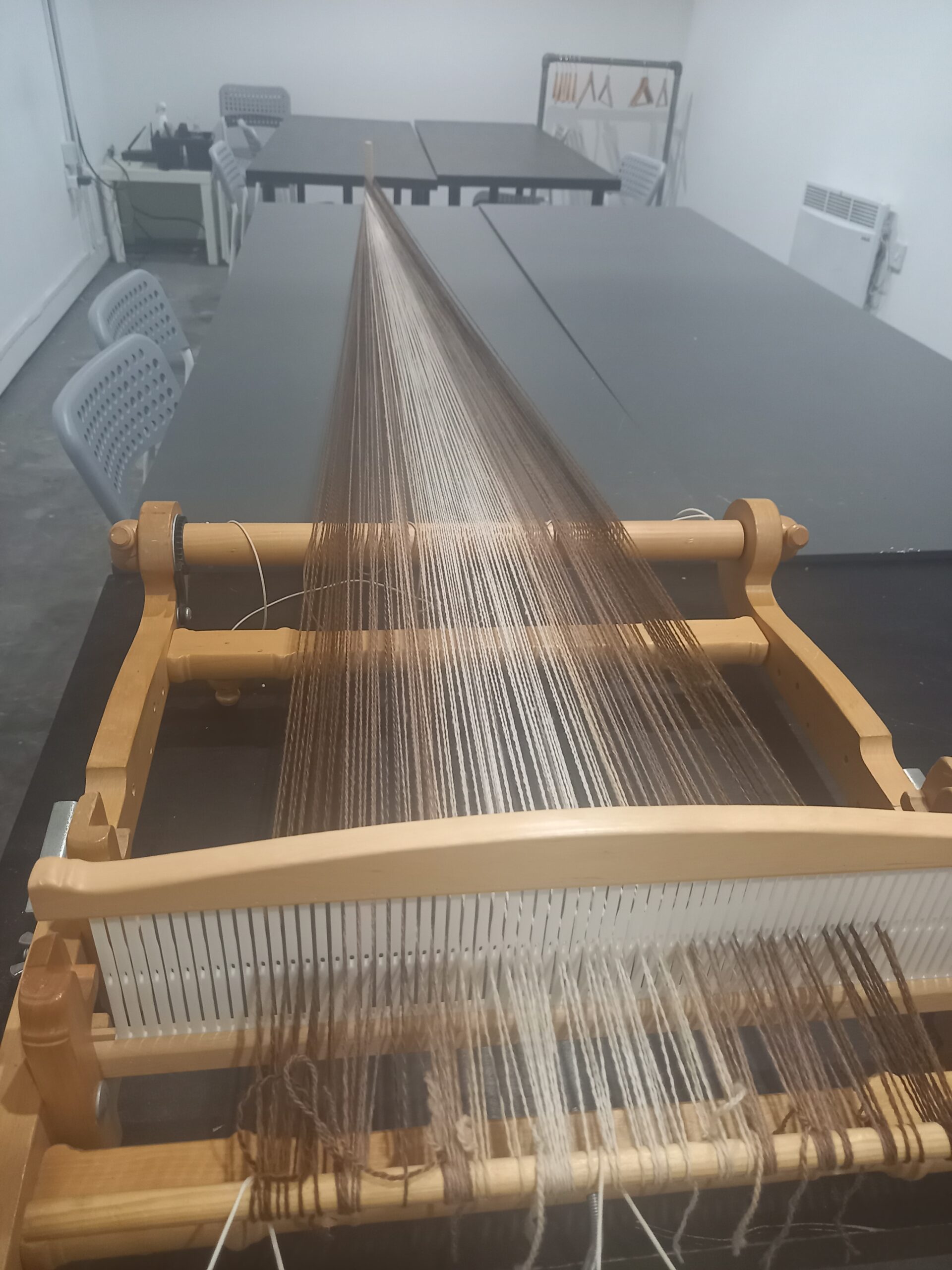
Having googled that the average length of a scarf is 80" ( 203cm) in length and 12" (30cm) wide I opted for my 16" (40cm) Kromski Harp Forte loom and used two 8dpi heddles which would give me a sett of 16epi
With maths giving me mainly a sinking feeling ( I know that is a terrible attitude to have) I took the easiest route I could to working out the amount of yarn I needed for warp and headed for Gist Yarn's warp calculator which told me I needed 841in (2136cm) for warp and 768 (1950cm) in for weft. Sound huge but cm are only little.
As this scarf was a graduated fade and I had chosen 4 shades to lead to the cream colour in the middle, I just made sure I had enough spun up - I spun a LOT. I'll probably have enough to knit a hat to go with the scarf and I don't regret all the spinning because it was such a gorgeous fibre that I think I just got lost in it
If you haven't woven using two heddles before then this might seem a little overwhelming at first but just take each step at a time. I'd recommend sampling a small piece first, without the colour gradient just to get into the flow. For your first time sample I would recommend two contrasting colours, maybe a dark and light blue for example
Your back heddle will be the one you warp up first. Whereas you probably will have been used to warping up with two threads in each slot moving one over into the adjacent hole, in this threading you will have two occasions in the pattern where there is four threads.
Leave a couple of slots each side before you start threading
Each rectangle represents a slot and each circle represents a hole. With this pattern you will thread along the whole of the section which will be all nine slots and then only repeat the repeated section for however wide you want your fabric to be
Start with the back heddle and concentrate on that, even put a piece of paper over the front heddle section so you don't get distracted
Start threading from right to left and work across - remember, thread all the way across just for the first time and then just thread the repeated section. Thread all the way along that back section and then check your work

So starting again from the right your first threading has been two ends (warp threads) through that one slot. One of those will go through the corresponding slot in the front heddle. The other thread will go into the hole on the left of that slot. If you've left one or two slots at the edge this should be easily identifiable and will help you get the correct threading as you go
Thread all the way along once and then just the repeated section. Don't panic when you see two empty holes appear on the back heddle, that's correct, it's where the pattern repeats. At no point should you have any hole to hole threading.
Once you've threaded your front heddle check your work. Tie on as you normally would and place some spacer yarn in and you're ready to weave
1 - this is front heddle up, weave one row
2 - this is back heddle up, weave one row
3 - this is both heddles down, weave one row
Weave in this sequence:
1 2 3 1 2 3 1 3 2 1 3 2 1 3
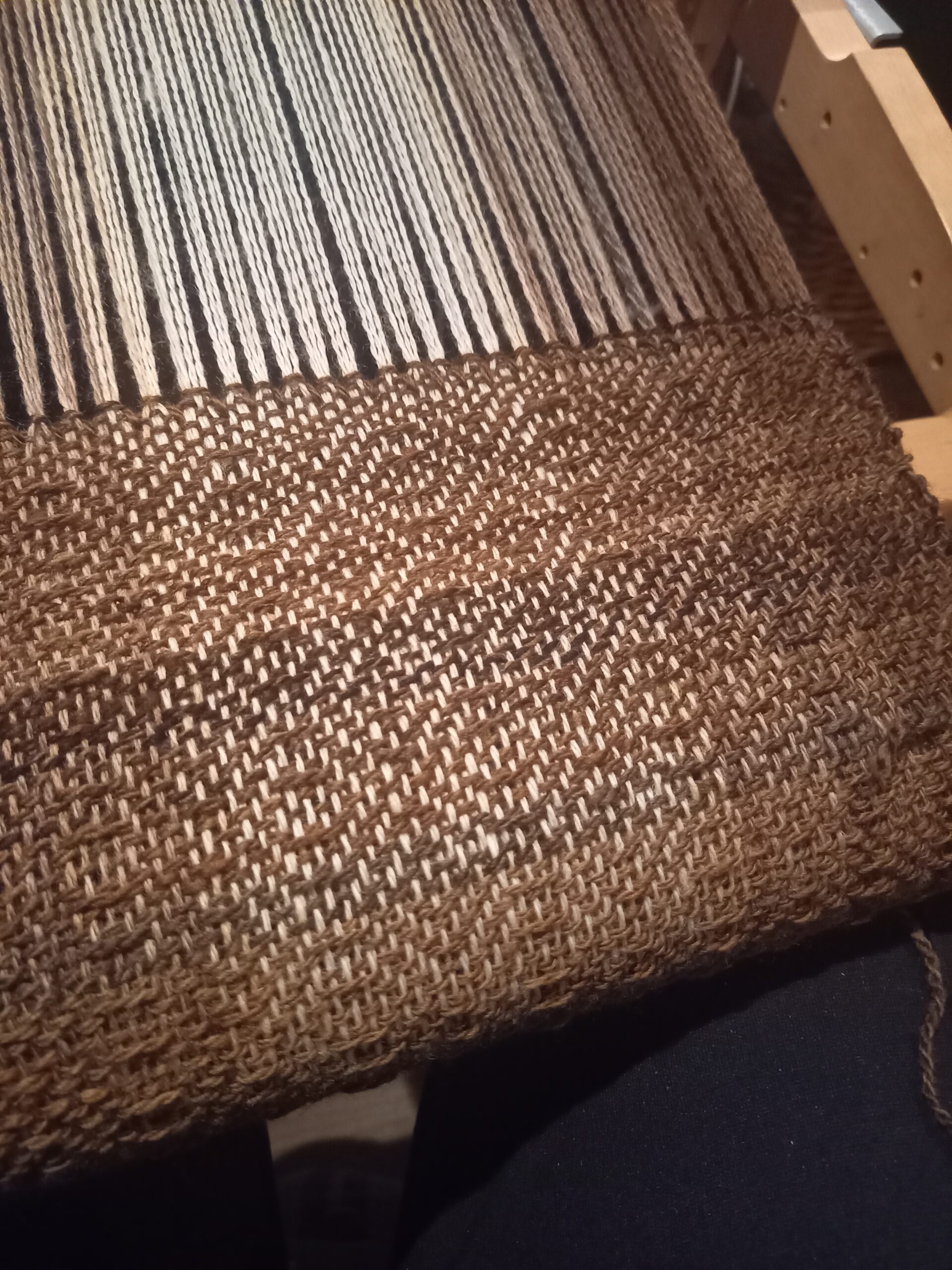
Don't panic if the pattern seems not so visible, it may be on the under side of the fabric so have a sneaky look. In this image the pattern seemed so lost but it was hiding underneath all along!
In the next post we will look at the gradient threading
If you'd like to join me on the next Diamond Twill dates you can come along to a two day workshop on 10th and 11th January or 6th and 7th March where we will cover diamond Twill and Double Width weaving. To join this workshop click here
or if Diamond Twill is just your thing, you can come for the first day on 10th January or 6th March, click here
Let me know how it goes!